Bethune College
Accredited with A+ in 3rd cycle NAAC, 2023
Educationist, Social and Political Activist
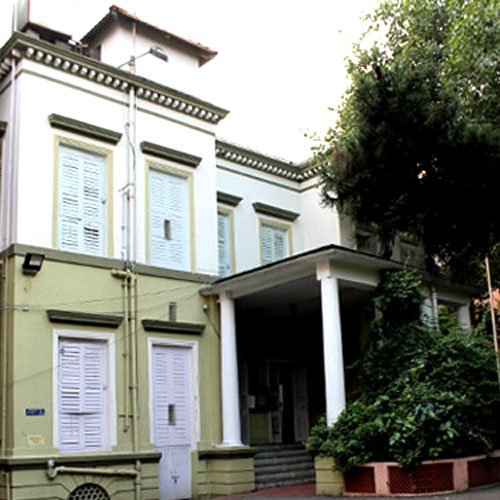
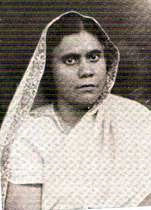
Jyotirmoyee Ganguli, educationist, social worker, and political activist, was the second daughter of Kadambini Ganguli. After completing her schooling at Brahmo Balika Shikshalay, she graduated from Bethune College, Kolkata, and passed her M.A. in Philosophy from the University of Calcutta. She taught at Bethune Collegiate School and later at Ravenshaw College, Cuttack, Odisha. Later, she became Principal, Women's College in Sri Lanka. She also served as Principal of several other institutions, including Jullundur Kanya Mahavidyalay. She was the first Woman-Councillor of Calcutta Corporation. Jyotirmayee Devi raised a female volunteer corps for the Indian National Congress. In 1926 she started the Students' Association for Social Service. She joined the Bengal Provincial Congress Committee and participated in the Satyagraha movement, serving as Vice-President of the Women's Satyagraha Committee, and was twice jailed in 1930 and 1932. She was a founding member of the Aryasthan Insurance Company. She was elected city councillor of Kolkata Municipal Corporation. In 1942 she was arrested for joining the Quit India Movement. Jyotirmayee Ganguly was killed in a Police firing on 22 November 1945.
Jayanti Ganguli (Barman), the youngest daughter of Kadambini Ganguli, was married to L. M. Barman, Private Secretary of Pramethesh Barua. She acted as the private tutor of Pramathesh Barua. She was a student of both Bethune Collegiate School and Bethune College. She lived in Moradabad for four years where she taught conservative Muslim girls and established a school for them, which later grew into a college.
Bela Haldar, worthy daughter of her illustrious mother Kadambini Ganguli had become a household name during her tenure at the AIR. Bela Haldar is the famous Beladi of Mahila Mahal.
Poet & Author
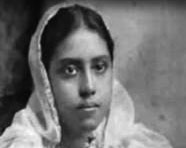
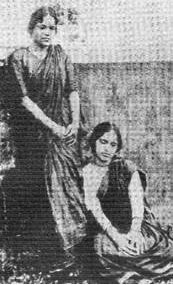
Shukhalata Rao, eminent children's book author and social worker, was the daughter of Upendra Kishore Roy Chowdhury, and sister of Sukumar Ray. She had a career in teaching. After marriage and moving to Cuttack, Shukhalata founded the Shishu-o-Matri Mangal Kendro (Centre for the Welfare of Children and Mothers). She also established the Orissa Nari Seva Sangha. Shukhalata was the editor of Alok, a newspaper. Shukhalata Rao was given the Kaiser-e-Hind award by the Government of India in 1956 for her book Nije Pora. She has written a book in English, titled Behula - the story of Chand Saudagar, Lakhinder and Behula. Rabindra Nath Tagore wrote the introduction for this book. Shukhalata died in 1969.
Poet & Author
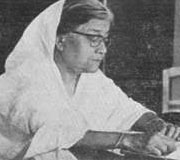
Shanta Devi and Sita Devi, daughters of Ramananda Chatterjee, were educated at home in the usual subjects including English language and then were sent to Bethune College. While students, they published a volume of stories translated from English. They introduced "Bre Rabbit" to Bengali nurseries. They translated George Eliot's works and some French stories. Sita Devi's first original story Light of Eyes appeared in Prabasi. They co-authored a novel Udyanlata,a series for Prabasi. They translated Srish Chandra Bose's Folk Tales of Hindustan as Hindusthani Upakaatha.
Singer
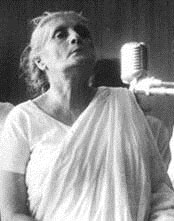
Kanak Das (Biswas), sister-in-law of Debabrata Biswas, who influenced his style of singing. She was a student of Bethune College from 1920 - 1923 but she could not give her B. A, final examination. Her first record came out in 1927. Her singing was characterized by modern pronunciation and boldness. She was also proficient in Dwijendrageeti, Nazrulgeeti and modern Bengali songs. She was given the title of Sangeet Pratima by the famous musical organization Ragini. She was the principal of the famous music school Geetabitan.
Educationist, Social & Political Activist
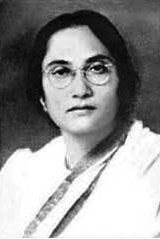
Leela Roy nee' Nag completed her BA (English) degree from Bethune College, Calcutta, receiving the Padmabati Gold Medal. She was the first woman to obtain the MA degree from the University of Dacca. She was the Assistant Secretary of Nikhil Banga Nari Votadhikar Samity and founded the Deepali Sangha. She established several Deepali Schools and Nari Shiksha Mandir. She also founded twelve Free Primary Schools. Dacca Deepali School was later named Qamrunnessa Girls' School. She established Gana Shiksha Parishad for spreading female education and established a working and needy girls' hostel at Calcutta. She was a member of a Revolutionary group Sree Sangha led by Hemchandra Ghosh and Anil Roy, whom she married later. She established the Mahila Atmaraksha Fund, the first self-defence martial art group in the region. Leela Nag was the founder editor of Jayasree, a women's monthly journal. The first woman to be detained under Bengal Ordinance Act from Dacca, she later joined Subhas Chandra Bose's Forward Bloc and was involved in relief work following the Calcutta and Noakhali riots of 1946. Elected member of the Constituent Assembly in 1946, she resigned soon after in protest against Partition and formed the East Bengal Minority Welfare Committee. She organised protest meetings against the Unauthorized Person's Eviction Bill, 1951 and was imprisoned during the Save East Bengal Movement.
Singer
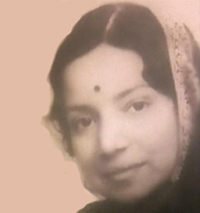
Amiya Thakur was admitted to the Intermediate class of Bethune College after completing her schooling from Bethune School. She learnt Tagore songs from Rabindranath Tagore himself and played the role of Pramada in Tagore's dance drama Mayar Khela, directed by Tagore himself. She was married to Hritendranath. A versatile singer, she learned Dhrupad from Jogindranath Bandyopadhyay, kheyal and tappa from Ramesh Chandra Bandyopadhyay.
Singer
Malati Ghoshal was a student of Bethune College in the 1920s. She was a famous exponent of Rabindrasangeet. She learned classical music from Gopeshwar Bandyopadhyay and Tagore songs from Ramesh Chandra Bandyopadhyay.

Actress
Maya Roy was a student of Bethune College when she got married to the artist Charu Roy. She acted in the silent film Siraj - a Romance of India (1928) followed by the talkie Anarkali at a time when women did not venture into cinema. She also helped her husband in the editing of the first cinema magazine Bioscope.
Actress
Kanakbati Devi, a student of Bethune College, was a renowned stage and film actress. She was the first graduate woman to enter the Bengal stage. She received lessons in music and acting from Tagore himself. In her college days Kankabati took part in various cultural activities. After graduation, Kankabati joined M.A.classes, but wished to enter the professional stage and in 1928, she signed a contract with Art Theatres whereby she would be their exclusive artiste for three years. This created a stir as this was a taboo for women from respectable families. However, Kankabati broke her contract unilaterally and joined the group of Sisir Kumar Bhaduri, who trained her for the singing role of Bharatnari in his play Digbijoyi in February, 1929. She performed in a number of plays, including Basantaleela and Tagore's Bisarjan, Buddhadeb Charit, Alamgir, Bibaha Bibhrat, Pally Samaj and many others.She accompanied Sisir Bhaduri's troupe on a tour of America. Kankabati appeared in silent films, including Bicharak, and later in talkies, such as Palli Samaj (1932), Seeta (1933) as Seeta and Talkie of Talkies. She suffered from meningitis in the course of shooting for Sisir Kumar Bhaduri's film Chanakya (1939) and was admitted in Carmichael Medical College in Calcutta where she breathed her last on 21st June, 1939.
Political Activist and revolutionary
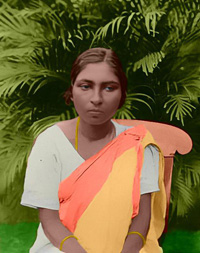
Kamala Dasgupta, a freedom fighter, graduated from Bethune College. Her political career began with the Jugantar Group. She trained herself in the art of Fighting with Lathi. In 1938 she took charge of editing Mandira a women's news. In 1939 she was arrested in connection with the Dalhousie Square Conspiracy Case for allegedly supplying a revolver to Bina Das who fired at Stanley Jackson, Governor of Bengal, and was imprisoned in Hijli jail. After the amalgamation of the Jugantar Group with the Indian National Congress, she became the Secretary of Bengal Provincial Women Congress and joined the Quit India Movement. She was asked by Gandhi to provide relief to victims of communal riots of Noakhali.She wrote Swadhinata Sangram ae Nari and her autobiography Rakter Akshare and worked for women's empowerment.