Bethune College
Accredited with A+ in 3rd cycle NAAC, 2023
Revolutionary
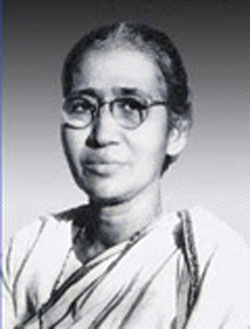
Mira Dutta Gupta, a teacher, social worker and political activist, had secured 2nd position and silver medal for her graduation at the Calcutta University in mathematics despite not sitting for one full paper. As the Secretary of the South Calcutta branch of 'Chhatri Sangha', she became the target of the police. During the August movement of 1942, she collected funds for revolutionaries. She was associated with Indian revolutionary groups, such as Anushilan, Jugantar and Bengal Volunteers and was the editor of the women's section of its magazine - Benu. She actively participated in relief work at the time of the Bengal Famine of 1943. She joined Netaji's Forward Bloc and was jailed for her nationalist activities in 1946. She was elected MLA twice and was Principal of the women's section of Surendra Nath College. She also contributed to the setting up of the Patha Bhavan School, Kolkata.
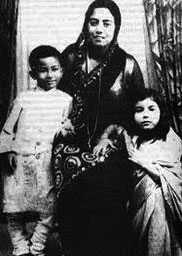
Political Activist and revolutionary
Rajmata Benita Roy, litterateur, diplomat and minister, was the forty-ninth Rani of the Chakma Circle in the Chittagong Hill Tract and grand-daughter of Keshub Chandra Sen, the Hindu reformer and Brahmo Samaj leader. She launched the first literary magazine Garika, featuring Chakma poetry, inspired by Rabindranath Tagore. During the Bangladesh Liberation War in 1971, Roy offered the Rangamati Palace as a shelter for civilians. In 1972, Sheikh Mujibur Rahman appointed her as a member of Bangladesh's first delegation to the UN General Assembly. During the political and constitutional crises of the mid 1970s, Roy served the Bangladesh Government as Minister of Land Administration and Land Reforms and Minister of Relief and Rehabilitation.
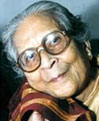
Educationist, Social & Political Activist
Ashoka Gupta, an eminent social worker, was brilliant in academics and secured first place among female candidates in matriculation. She joined Bethune College, to study mathematics. She was the founder of Mahila Seva Samity, a member of the All-India Women's Conference and President of Indian Society for Sponsorship and Adoption. She actively set up branches of AIWC. She was engaged in relief operations during the Bengal Famine of 1943, and the Noakhali riots. After Partition, she engaged herself in refugee rehabilitation, child literacy and up-liftment of rural women and tribal communities. She was a Fellow of the Senate of the University of Calcutta and was chairperson of the West Bengal State Social Welfare Advisory Board from 1955 to 1959 and a member of the Central Social Welfare Board. She was the State Commissioner (Guides) and the State Chief Commissioner of the Bharat Scouts and Guides. She was associated with the Palli Sangathan Vibhag of Visva Bharati University from 1956 and a member of the Executive Council. During the Bangladesh War she and her husband set up the Bangladesh Anushandhan Committee. She was a member of the advisory committee of the Bengal Board, Board of the LIC, of the Karma Samiti of Viswa Bharati, and Kasturba Trust. She was the President of the All Indian Women's Conference for five years, and state chief commissioner of the Indian Scouts and Guides Associations for three years, president of the SOS children's villages, president of Buniyadi Vidyapeeth, patron of the Kasturba Gandhi National Memorial Trust and the Indian Society for Sponsorship and Adoption. A founder member of the Mahila Seva Samiti, she received the Jamnalal Bajaj award for lifetime achievement. Her memoir is widely read.
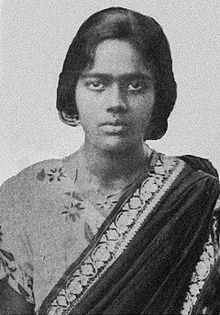
Revolutionary
Pritilata Waddedar, a fearless nationalist revolutionary, was deeply involved in the Indian independence struggle. She graduated in Philosophy with distinction. However, her degree, along with that of co-revolutionary, Bina Das, was withheld by the British officials of Calcutta University. She joined the revolutionary group headed by Masterda Surya Sen in her student days. After completing her education, Pritilata returned to Chittagong and joined as headmistress of Nandankaran Aparnacharan School for girls. She was trained in lathi khela and gun fighting, and trained other girls. She also supplied explosives, wrote nationalist pamphlets and was in the "Bengal's Most Wanted List" at the age of 21. Pritilata led the attack on Pahartali European Railway Officers' Club of Chittagong and captured the Reserve Police Line. Under her able leadership, all the others could escape safely, but she had to commit suicide by swallowing a capsule of potassium cyanide.
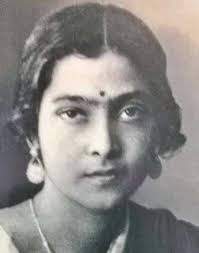
Revolutionary
Bina Das (Bhowmick), a dauntless freedom fighter was a student of Bethune College in 1928. Her political career began with the Simon Commission Boycott movement. She joined the revolutionaries and along with her fellow students organized their first protest against the Simon Commission and were threatened with dire consequences by the British Principal of the College. She tried to shoot the Governor,Stanley Jackson during the convocation ceremony at Calcutta University in 1932, where she was to receive her graduation degree. Bina Das served nine years in rigorous imprisonment. She was MLA of West Bengal Assembly from 1946 - 1951. Shrinkhal Jhankar and Pitridhan, books written by Bina Das are valuable records of the freedom struggle. She won the Padma Shri award in 1960 for social work. She lived in seclusion in Rishikesh in the last years of her life.
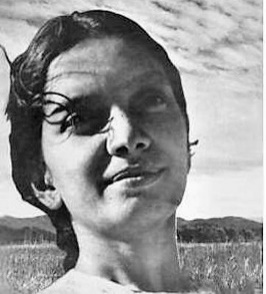
Revolutionary
Kalpana Joshi, after passing her matriculation in 1929, came to Calcutta and joined Bethune College to study science, where she met Pritilata Wadedar and Bina Das, the firebrand revolutionaries, and joined Chhatri Sangha. After the Chittagong Armoury Raid in 1930, Kalpana Dutta joined the Indian Republican Army, Chittagong Branch in 1931 and actively participated in the 'dynamite conspiracy' case which ultimately failed. She evaded arrest for a long time, but was ultimately caught and was given a life-sentence and, although released in 1939, she remained under house arrest till 1942. Even Rabindranath Tagore had striven for her release. She married Puranchand Joshi - the former General Secretary of the undivided Communist Party of India. She later joined the Indian Statistical Institute where she worked till her retirement. Known as Agnikanya of Bengal, as MasterDa used to call her, Kalpana Dutta is remembered as one of the bravest patriots of India.

Political Activist and revolutionary
Shudhalata Sarkar passed her Intermediate examination from Bethune College in 1932. and graduated with Mathematics Honours from Vidyasagar College. She actively participated in the Non-Cooperation Movement. She attended all the important meetings of the Old Students' Association even in her nineties. Tarak-Sudha Endowment Fund of Rs. 45 Lacs was created by Shudhalata's children and the interest from the fund is used for a yearly award for leadership in Mathematics and Computer Science in Bethune College.
Actress
Usha Devjani Khan, a student of Bethune College, was a renowned actress, remembered for her role as Henrieta opposite Utpal Dutta in the Bengali film Michael Madhusudan (1950) directed by Madhu Bose. She also acted in a few other Bengali films.
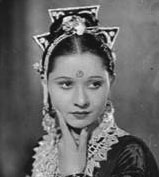
Actress
Sadhana Bose, granddaughter of Keshab Chandra Sen was a renowned danseuse, actress and singer, married to film-maker Madhu Bose. A contemporary of Uday Shankar, she staged a number of ballets in Kolkata, including Bhookh on Bengal famine, and Omar Khayyam. She acted in Alibaba (1937), Abhinoy (Bengali-1938), Kumkum (1940), Rajnartaki (1941), Meenakshi (1942), Shankar Parvati, Vishkanya, Paigham, Shesher Kabita, and Maa O Chhele.
Academician
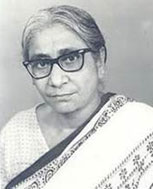
Dr.(Prof.) Asima Chatterjee, noted scientist and teacher, was a student of Bethune College and obtained her M.Sc. Degree from Calcutta University in 1938, with organic chemistry as her special paper. She was the first woman to be awarded a D.Sc. degree in 1944. She was a Premchand Roychand Scholar of the University of Calcutta. In 1940 she joined Lady Brabourne College as the Founder- Head of the Department of Chemistry. She also served as Khaira Professor of Chemistry in the University of Calcutta. She worked with L.M. Parks of University of Wisconsin, USA on naturally occurring glycosides. Chatterjee successfully developed the anti-epileptic drug Ayush-56 and the anti-malarial drug, patented drugs h marketed by several companies. She made significant contributions in the field of medicinal chemistry, analytical chemistry, and mechanistic organic chemistry. She published around four hundred papers in national and international journals and more than a score of review articles. Chatterjee edited and revised the six-volume Bharatiya Banoushodhi published by Calcutta University and was Chief-Editor of the six volume series, The Treatise of Indian Medicinal Plants published by CSIR. She was Fellow of the Indian National Science Academy (INSA), New Delhi (1960), and received the Shanti Swarup Bhatnagar Award (1961), Padma Bhushan (1975) amongst other awards. In 1972, she was appointed Honorary Coordinator of the Special Assistance Programme sanctioned by the Indian University Grants Commission. She was the first woman General President of the Indian Science Congress Association (1975) and was nominated Member of Rajya Sabha from February 1982 till May 1990.